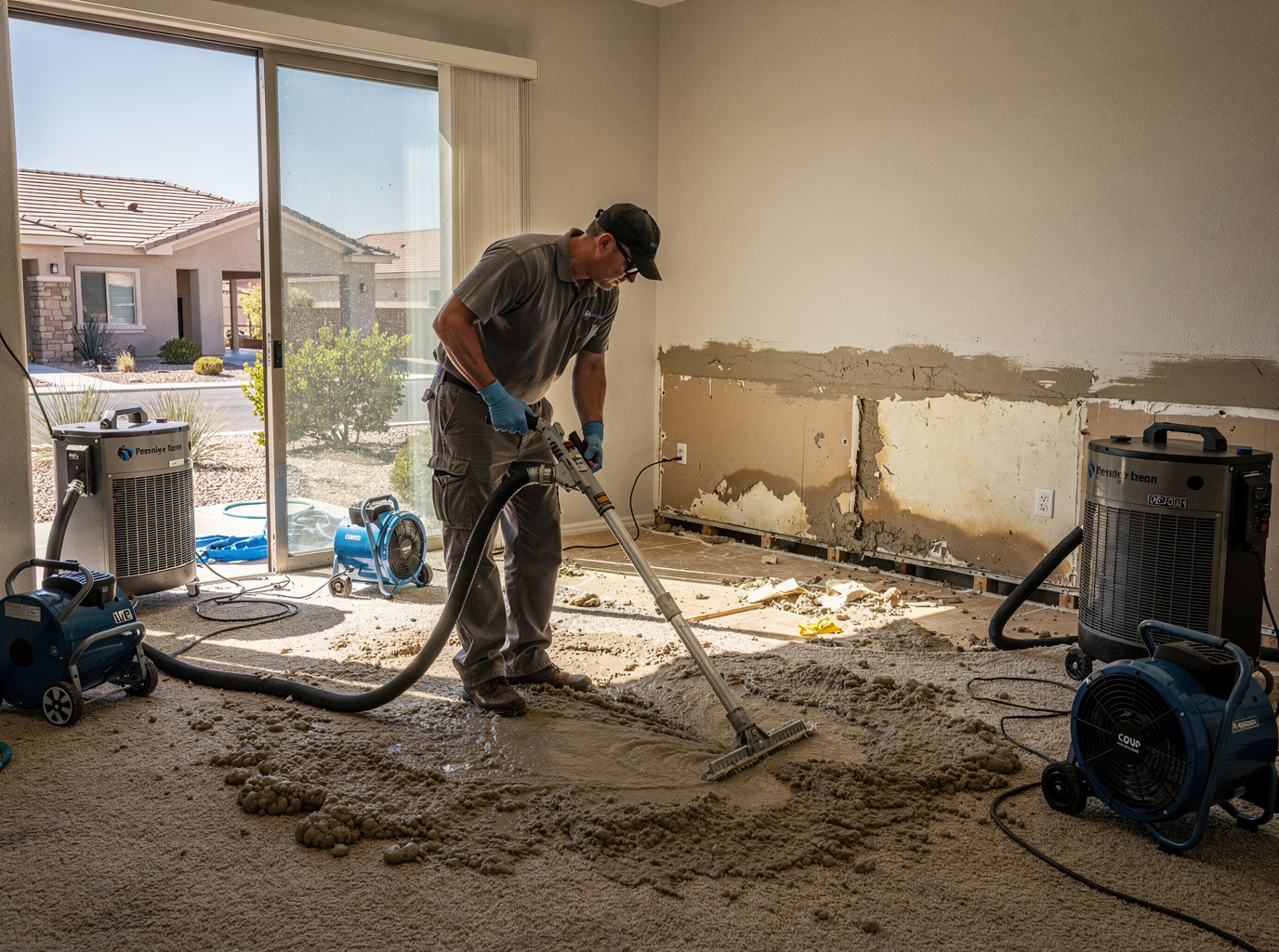
Las Vegas homes in older Downtown neighborhoods and mid-century tracts in Sunrise Manor often feature single-layer drywall over slab foundations that absorb water quickly during monsoon flash floods common in Clark County. Hot desert summers accelerate mold growth within 48 hours when humidity spikes after a pipe burst or AC condensation failure, so extraction must start immediately to prevent hidden damage behind tile in bathrooms common to Centennial Hills properties.
Technicians working near the Las Vegas Strip and Arts District encounter high-rise condos with shared plumbing stacks that can send water into multiple units below. In Summerlin and Enterprise, newer stucco exteriors hide roof leaks that travel along metal framing, requiring moisture meters and thermal imaging to locate saturation before drywall removal. Mild winters do little to slow evaporation, so dehumidifiers run longer to reach the 40 percent target needed for insurance documentation.
Sewage backups from overloaded lines in North Las Vegas and Boulder City demand full containment and antimicrobial treatment because desert soil does not drain quickly. Restoration crews must also account for the fine dust that infiltrates drying equipment, requiring extra HEPA filtration steps not needed in wetter climates.
Homeowners in Chinatown and Lone Mountain frequently face slab leaks from older copper lines that corrode faster in alkaline groundwater. Proper documentation of affected square footage and material types ensures claims move smoothly with Clark County permitting when structural repairs are required.
Technician insight
In Las Vegas the thing that catches most people out with water damage restoration is how fast mold takes hold once monsoon moisture hits older slab homes in Downtown or Sunrise Manor. Homeowners often wait until they smell it, but by then the fine desert dust has already carried spores into the HVAC and the job doubles in scope.
Summerlin Slab Leak
A homeowner in Summerlin noticed buckling hardwood after an unnoticed pipe leak under the slab. Inspection revealed water had traveled under tile into two adjacent rooms. Extraction and targeted drying prevented mold growth in the hot summer conditions. Affected flooring and baseboards were replaced and the home returned to normal use within five days.
Water Damage Restoration Services We Offer
✓Emergency Water Extraction
Rapid removal of standing water from homes and businesses in The Strip, Downtown Las Vegas and surrounding Clark County areas to limit secondary damage.
✓Structural Drying and Dehumidification
Industrial drying of walls, floors and ceilings in Summerlin and Spring Valley properties using targeted airflow and moisture monitoring suited to desert heat.
✓Mold Remediation After Water Damage
Containment and removal of mold colonies that develop quickly in Centennial Hills and Enterprise homes after leaks or monsoon intrusion.
✓Drywall and Insulation Replacement
Selective removal and reinstallation of saturated drywall in older Sunrise Manor and Arts District residences to restore structural integrity.
✓Sewage Cleanup and Sanitation
Full biohazard cleaning and disinfection for properties in North Las Vegas and Boulder City affected by backed-up sewer lines.
✓Carpet and Hardwood Floor Restoration
Cleaning, drying and refinishing of flooring materials common in Chinatown and Lone Mountain homes after water intrusion.
Water Damage Restoration Cost in Las Vegas, NV
| Service | Typical Range | What Affects It |
|---|---|---|
| Emergency Water Extraction | $600–$2,200 | Varies by square footage and whether water is clean or contaminated. |
| Full Structural Drying | $800–$3,500 | Influenced by number of rooms and duration required in summer heat. |
| Mold Remediation Add-On | $1,200–$4,000 | Depends on containment size and HVAC involvement. |
| Drywall Replacement | $450–$1,800 | Based on linear feet and whether insulation must also be replaced. |
Ranges are typical for Las Vegas, NV and confirmed with an exact written quote before any work starts.
How it works
- 1
On-Site Assessment
Technicians inspect affected areas in the specific neighborhood, document moisture levels and identify hidden water paths behind walls or under slabs.
- 2
Water Removal
Pumps and extractors clear standing water while protecting unaffected portions of the property from cross-contamination.
- 3
Drying And Monitoring
Equipment placement and daily moisture readings continue until materials reach safe drying standards for the local climate.
- 4
Restoration And Repairs
Damaged materials are replaced and surfaces are returned to pre-loss condition with attention to Clark County code requirements.
Pricing
Upfront quotes provided after inspection; final cost depends on water volume, affected materials and access challenges.