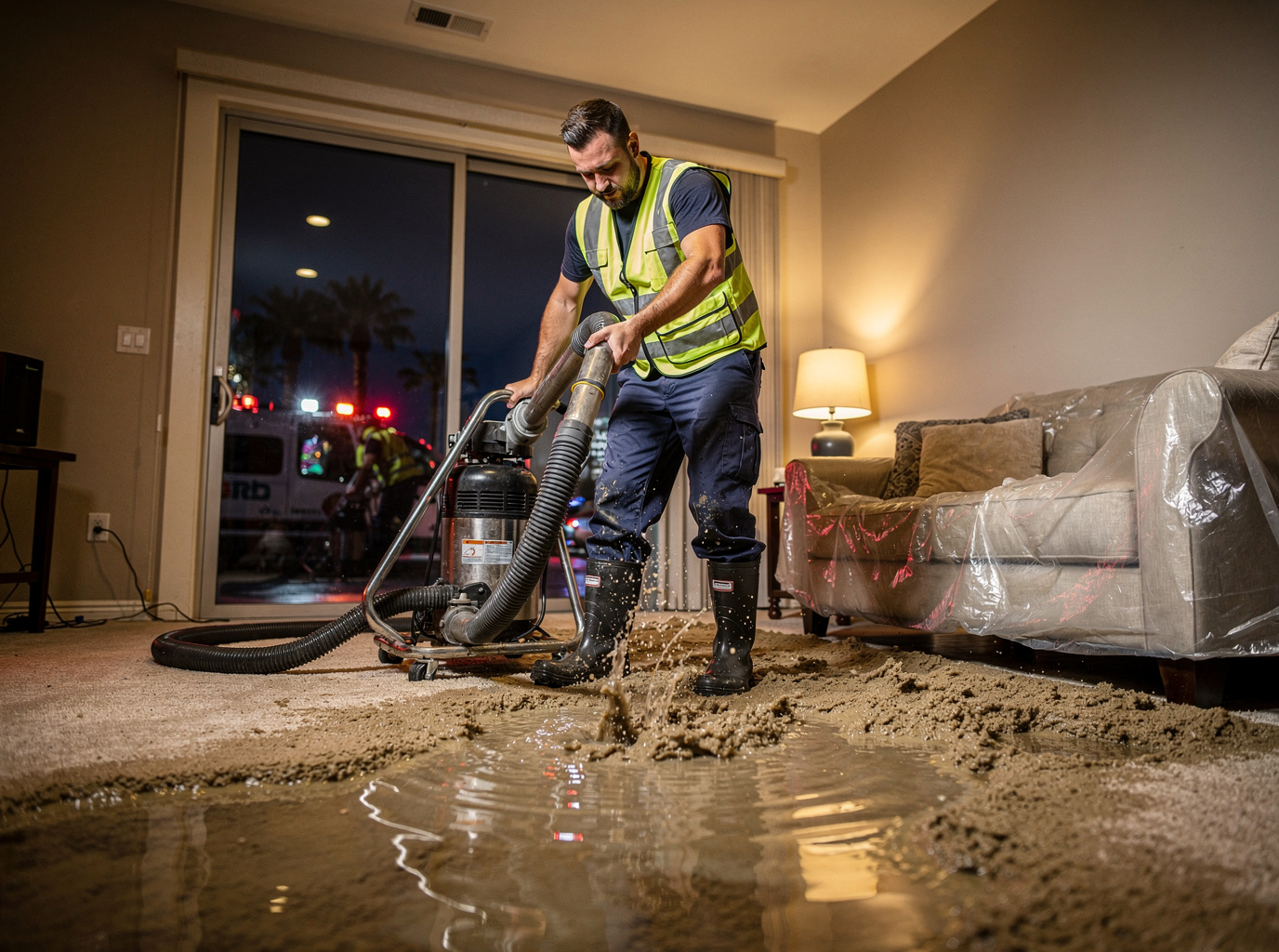
Boulder City homes sit in a high-desert setting with quick temperature swings and occasional flash flooding off the surrounding ridges. Water from a burst line or roof leak can travel fast through the older stucco and concrete-block construction common on streets like Nevada Way and Wyoming Street. Our crews reach these properties from the 2702 S Highland Dr shop within the posted hours, bringing equipment sized for the tight lots and narrow driveways typical east of the historic district.
Proximity to Lake Mead and the Hoover Dam means higher ambient moisture during monsoon season, so drying times stretch longer than in drier parts of Clark County. We map moisture through slab-on-grade floors and into the original 1930s plaster walls that still stand in many neighborhoods. Every job starts with an on-site assessment so homeowners know exactly what extraction and drying steps will follow.
Access from US 93 can slow response during peak tourist traffic, so we stage trucks early when calls come from the area around Railroad Pass or Veterans Memorial Park. The goal is to stop secondary damage before it reaches neighboring units in the compact historic blocks.
Around 3. Boulder City
We regularly work near:
- 📍Hoover Dam
- 📍Lake Mead National Recreation Area
- 📍Boulder City Historic District
- 📍Bootleg Canyon Mountain Bike Park
- 📍Veterans Memorial Park
- 📍Railroad Pass
Water Damage Restoration in 3. Boulder City — Local Notes
- •Many 1930s homes in the Boulder City Historic District have single-wall construction and original cast-iron plumbing that leaks at joints hidden behind cabinets.
- •Sloped lots near Bootleg Canyon direct runoff toward foundations during summer storms, pushing water under slabs faster than flat neighborhoods.
- •Narrow streets around the downtown core limit equipment parking, so we often use smaller portable extractors on jobs inside the historic grid.
- •Higher humidity from Lake Mead keeps drywall and insulation damp longer, requiring extended drying with low-grain dehumidifiers.