2026-11-09 · Marcus Hale
Common AC Condensation Issues Leading to Water Damage in Las Vegas
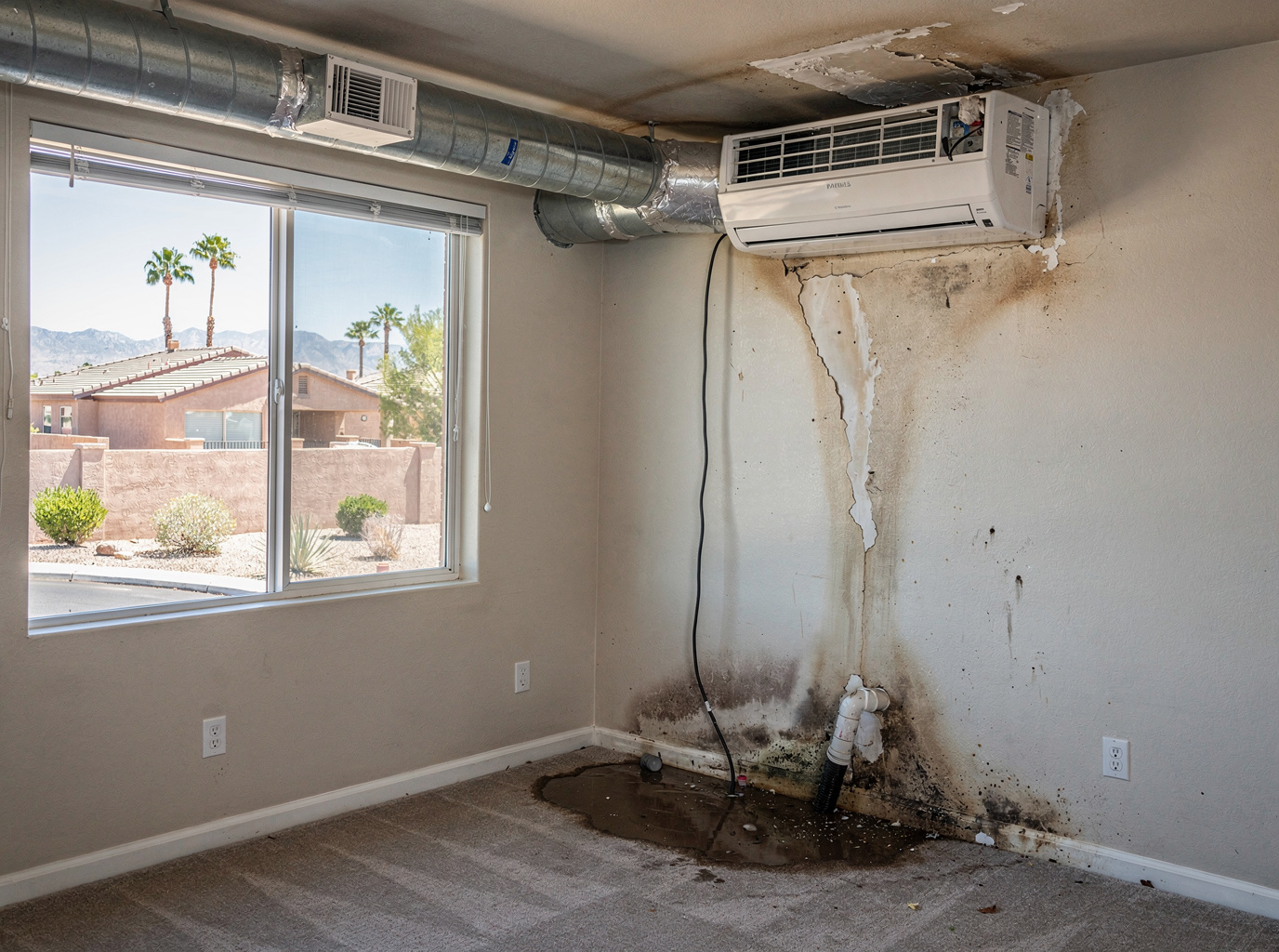
In Las Vegas, AC condensation issues commonly cause water damage when drain lines clog or coils freeze during peak summer loads, with leaks appearing within 2–4 weeks of neglect in homes throughout Clark County. The hot desert climate forces units to run 18–24 hours daily from May through September, producing excess moisture that pools if not drained properly. Older housing stock in areas like Downtown Las Vegas and the Arts District often features aging ductwork that hides these leaks until ceilings stain or floors buckle. Newer builds in Summerlin and Centennial Hills face similar risks when high-efficiency systems are installed without adequate slope on drain lines.
Clogged Drain Lines from Desert Dust
Las Vegas air carries fine desert dust that mixes with condensation to form sludge inside AC drain lines, blocking flow in as little as 8–12 weeks during heavy summer use. Homeowners in Enterprise and Spring Valley report frequent backups because rooftop units sit exposed to blowing sand near Red Rock Canyon. When the line clogs, water backs up into the pan and eventually overflows into attic insulation or wall cavities. Checking the line monthly by pouring a cup of vinegar through the access point prevents most buildup. In neighborhoods like Sunrise Manor, where homes from the 1980s still use original units, these clogs appear even faster due to narrower ¾-inch pipes. Regular flushing keeps the system moving and stops moisture from reaching drywall or subfloors.
Frozen Coils in Overworked Systems
When filters stay dirty for more than 30 days, airflow drops and coils freeze solid in the dry 110-degree heat common around the Las Vegas Strip and Chinatown. Once the unit cycles off, the ice melts rapidly and dumps 1–3 gallons of water into the drain pan or directly onto ceiling joists. Residents in Lone Mountain and North Las Vegas see this pattern spike in July when temperatures stay above 105 degrees for consecutive weeks. Low refrigerant levels from small leaks accelerate freezing because the coil runs colder than designed. Catching the issue early means shutting off the system and letting it thaw before water migrates to lower floors. Homes near Mandalay Bay and Caesars Palace often share this problem because shared walls limit attic ventilation and trap humid air around the equipment.
Hidden Damage in Attics and Walls
Condensation leaks frequently travel along ceiling joists before appearing as stains, especially in single-story homes common in Henderson and Boulder City. By the time water reaches visible drywall, insulation may already hold moisture for weeks, creating conditions for mold in the low-humidity but warm environment. In the Arts District, converted warehouse spaces with exposed ductwork make leaks easier to spot but harder to contain once they reach concrete floors. Water can also wick into baseboards near the High Roller area where older slab construction leaves little crawlspace access. Checking for musty odors near return vents or soft spots in ceilings provides early warning before structural members weaken.
Practical Steps for Las Vegas Homeowners
Replace filters every 30 days from April through October and schedule coil cleaning twice per season to maintain airflow. Verify the drain line slopes at least 1 inch per 10 feet from the unit to the exit point. During monsoon season, inspect the secondary pan float switch to ensure it shuts the system down before overflow occurs. For homes in Paradise or Whitney, adding a condensate pump with an alarm helps when gravity drains run uphill to street level. These steps reduce the chance of water reaching subfloors or electrical boxes.
When leaks have already affected multiple rooms, professional water damage restoration becomes necessary to extract moisture from insulation and prevent secondary damage. See our guide on drying out water damage in Las Vegas dry climate conditions for equipment details. Properties in Henderson and surrounding Clark County cities can also review water damage repair options suited to local construction. Our team operates from 2702 S Highland Dr, Las Vegas, NV 89109, Monday–Friday 8am–6pm and Saturday 9am–2pm.